



●Various Symptoms of Facial Nerve Palsy
Facial nerve palsy is a condition in which sudden paralysis affects one side of the face. It is most commonly associated with viral reactivation, especially herpes simplex virus, and Bell’s palsy and Ramsay Hunt syndrome make up about 70% of cases.
Bell’s palsy
Bell’s palsy is the most common cause of facial nerve palsy.
International epidemiological studies suggest that Bell’s palsy occurs at a rate of approximately 15–30 cases per 100,000 people per year.
It affects men and women equally and can occur at any age, although the incidence peaks in middle-aged adults, particularly in their 40s and 50s. Occurrence in children, especially those under 10 years of age, is relatively uncommon.
No clear seasonal variation has been identified.
Bell’s palsy generally has a favorable natural course.
Approximately 70–80% of patients recover completely without any residual symptoms, and about 80% or more achieve a satisfactory level of recovery.
Incomplete recovery occurs in roughly 15–20% of cases, while severe long-term sequelae are seen in only a small proportion (around 3–5%).
Ramsay Hunt syndrome
Ramsay Hunt syndrome is a relatively rare cause of facial nerve palsy, with an estimated annual incidence of approximately 2–3 cases per 100,000 people.
There is no clear difference between men and women. The age distribution shows a bimodal peak, occurring most commonly in people in their 20s and 50s.
Seasonal variation has been reported, with fewer cases occurring in May and August, and a higher incidence seen in March–April and June–July.
Prognosis
Compared with Bell’s palsy, Ramsay Hunt syndrome generally has a less favorable prognosis.
Studies report that complete recovery of facial nerve function occurs in approximately 50–60% of cases, which is lower than the natural recovery rate seen in Bell’s palsy.
Symptoms
In addition to facial nerve paralysis, Ramsay Hunt syndrome is characterized by symptoms related to herpes zoster infection, including:
- Blistering rash around the ear canal or auricle
- Severe ear pain
- Tinnitus (ringing in the ear)
- Hearing loss
- Vertigo or dizziness
In individual patients, several of these symptoms may occur together, and the clinical presentation can vary.
Clinical Importance
Most patients with peripheral facial nerve palsy who visit acupuncture clinics are diagnosed with either Bell’s palsy or Ramsay Hunt syndrome.
Because Ramsay Hunt syndrome generally has a poorer prognosis than Bell’s palsy, it is essential to correctly understand and distinguish these conditions, taking into account their different underlying mechanisms.
●Advice
One possible contributing factor to the onset of facial nerve palsy is reduced physical strength or general fatigue.
For this reason, it is important to avoid excessive stress and ensure adequate rest and sufficient sleep.
Because symptoms often appear suddenly on the face, many patients experience emotional shock or anxiety and may feel psychologically discouraged.
However, there is a good possibility of improvement, so we encourage patients to maintain a positive and active lifestyle as much as possible.
It is also important to protect the face from cold exposure, such as cold wind or air conditioning, as cooling the face may worsen symptoms.
Facial Exercises You Can Do at Home
Simple facial muscle exercises can be helpful. These include:
- Making various facial expressions while looking in a mirror
- Clearly pronouncing vowel sounds (A, E, I, O, U)
- Repeatedly opening and closing the eyes
These exercises are best performed twice a day (morning and evening) for about 5 minutes each session, keeping them short and gentle.
Our Treatment Approach
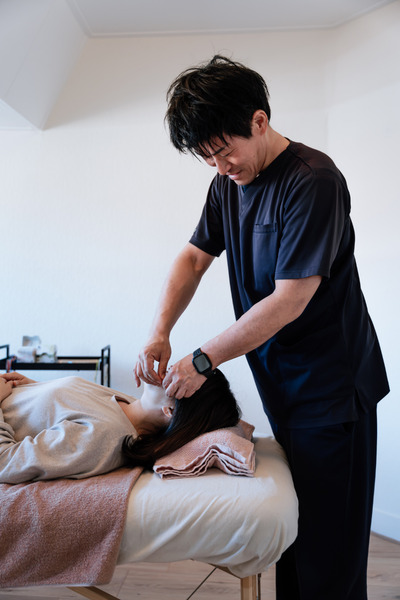
For facial nerve palsy, we provide whole-body regulation and acupuncture treatment aimed at improving nerve function and facial paralysis.
In addition, we offer facial muscle exercises and lifestyle guidance tailored to each patient’s symptoms.
We invite you to receive acupuncture treatment with confidence and peace of mind.
●FAQ
-
What kind of treatment do you provide?
-
We provide full-body acupuncture and, when needed, gentle facial acupuncture using fine needles, adjusting the needle size based on each patient’s condition.
-
I developed facial nerve palsy and no longer feel like going out. Will it heal if I just leave it alone?
-
Facial nerve palsy can be shocking, but early care and maintaining overall health can support recovery and improve outcomes. We encourage you to seek treatment early and visit us with confidence.
-
Does facial nerve palsy really recover
-
Bell’s palsy and Ramsay Hunt syndrome often improve naturally. Acupuncture may help support recovery by improving overall condition and targeting specific facial points.

