



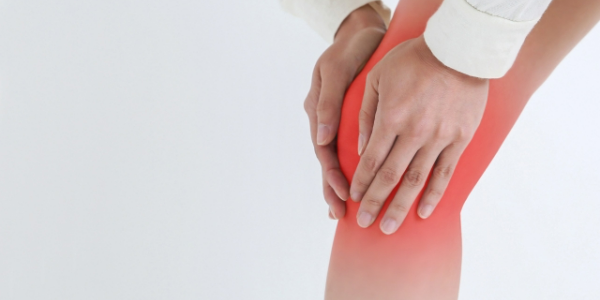
Many cases of knee pain are related to knee osteoarthritis.
In people over the age of 45, pain on the inner side of the knee is often related to knee osteoarthritis.
In younger individuals, knee pain is more likely caused by problems with ligaments, the meniscus, or the joint capsule, depending on where the pain occurs.
Pain on the outer side of the knee after long-distance running is often known as runner’s knee, while pain above the kneecap from repeated jumping is called jumper’s knee.
Pain below the knee during growth periods may be related to Osgood–Schlatter disease.
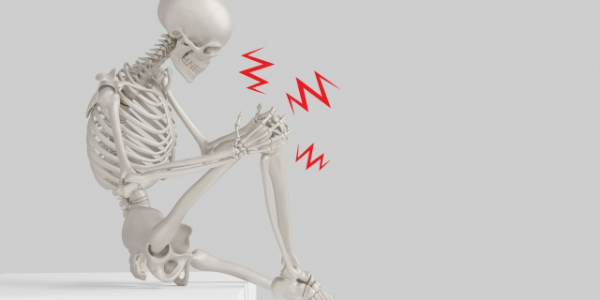
Definition of Knee Osteoarthritis
The knee joint is mainly formed by the femur (thigh bone) and the tibia (shin bone).
The ends of these bones are covered with smooth cartilage, and the joint is filled with synovial fluid, allowing the knee to move smoothly.
With aging, this cartilage gradually wears down, reducing smooth movement and sometimes causing inflammation of the joint capsule due to cartilage debris. This condition is known as knee osteoarthritis.
Typical symptoms include pain on the inner side of the knee when standing up from a chair, walking, climbing or descending stairs, or sitting on the floor.
A characteristic feature is that the pain is often strongest at the start of movement.
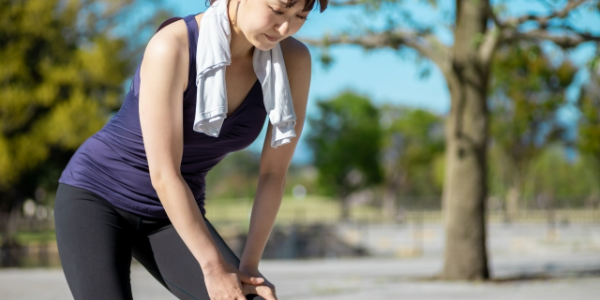
Runner’s Knee
Repeated knee bending and extension, such as during running, can cause the iliotibial band on the outer thigh to rub against the outer side of the knee joint (the lateral femoral condyle), leading to inflammation.
In the early stages, pain is often felt only when running downhill. Over time, the pain may occur on any running surface and can eventually be present even during everyday movements, not just running.

In Germany, large-scale clinical studies have been conducted on the effectiveness of acupuncture for knee osteoarthritis.
In Germany, a large-scale study was conducted to evaluate the effectiveness, efficacy, and safety of acupuncture for knee osteoarthritis.
From 2000, over a period of approximately five years, the study involved around 300,000 patients.
The results showed that patients who received an average of 7 to 13 acupuncture treatments over three months experienced significantly greater pain relief compared to those who did not receive acupuncture.
These findings demonstrate that acupuncture is a highly effective treatment option for pain management in knee osteoarthritis.
Advics
One of the most important ways to prevent knee pain is to strengthen the quadriceps muscle, located above the knee.
Stronger quadriceps help distribute body weight more evenly across the knee joint, reducing stress on the cartilage and improving blood circulation around the knee.
Additional preventive measures include maintaining a healthy body weight, wearing properly fitted shoes, and avoiding exposure to cold around the knees.
A simple and safe exercise is performed while lying on your back: fully straighten the knee and gently press the back of the knee toward the floor, holding the contraction for three seconds, then relax. Repeat this movement five times.
This exercise should be done every morning and before bedtime, and continued for at least three months to achieve noticeable benefits.
If pain is present, begin the exercise only after the pain has subsided.
Acupuncture can be safely used alongside these measures and is recommended as a supportive treatment for knee pain prevention and recovery.

